Introduction
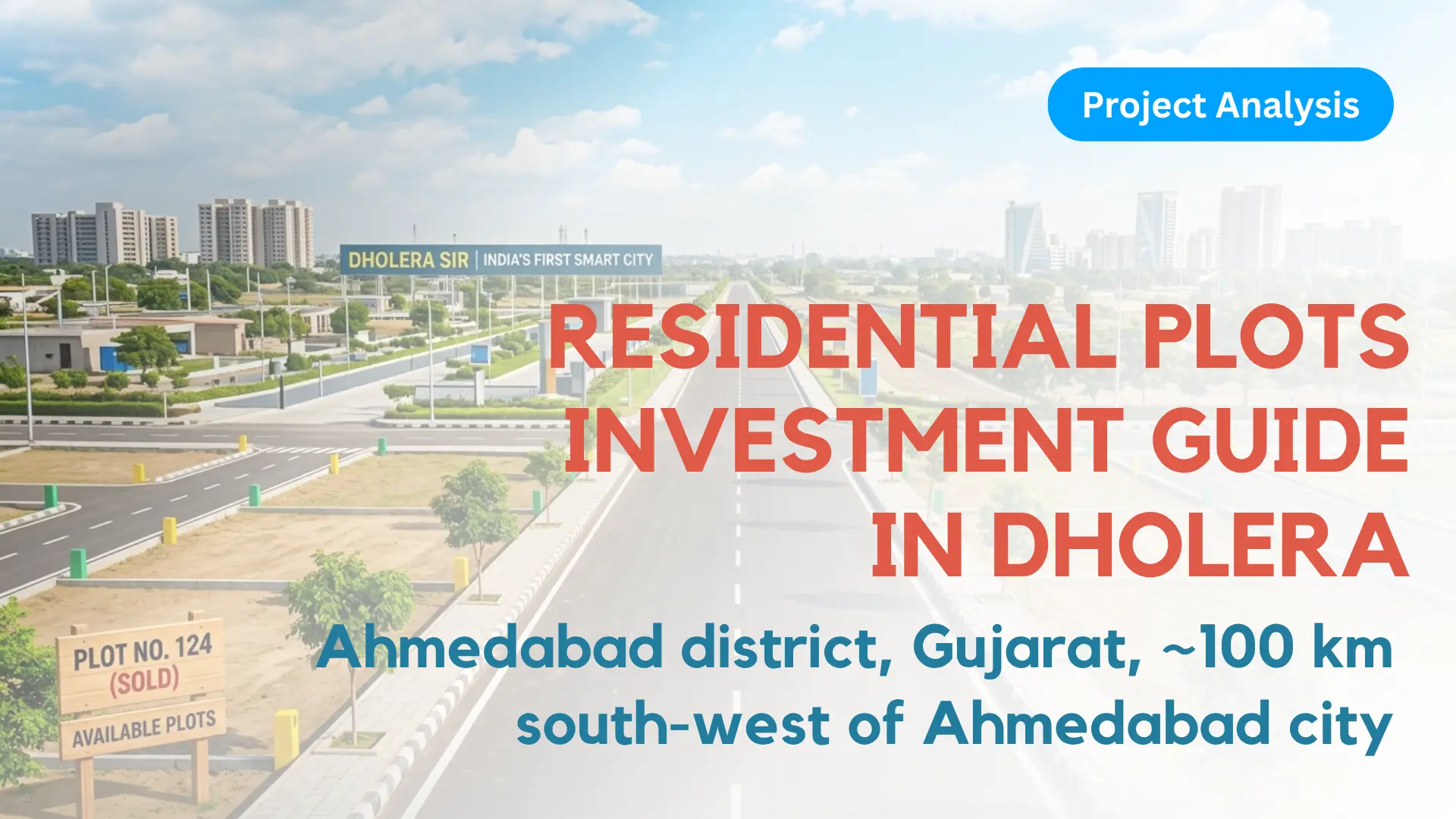
Dholera plots have become one of the most searched real estate topics out of Gujarat, and for once the hype has some real infrastructure behind it. This is not a marketing pitch — it is a factual, referenced look at what Dholera Smart City actually is, what has been built versus what is still on paper, what Dholera plot price realistically looks like today across different zones, and what an investor — whether putting in ₹5 lakh or ₹5 crore into Dholera SIR property — needs to verify before signing anything.
Dholera at a Glance
| Feature | Details |
|---|---|
| Region Name | Dholera Special Investment Region (DSIR) |
| Location | Ahmedabad district, Gujarat, ~100 km south-west of Ahmedabad city |
| Total Notified Area | Over 920 sq. km |
| Developable Area | Approximately 580 sq. km, with ~422 sq. km under Town Planning (TP) schemes |
| Nodal Authority | Dholera Industrial City Development Ltd. (DICDL) / Dholera SIR Development Authority (DSIRDA) |
| Development Model | Government of India + Government of Gujarat, under the Delhi–Mumbai Industrial Corridor (DMIC) programme |
| Project Origin | Notified in 2011; construction of core infrastructure began in earnest post-2016 |
| Development Phases | 6 Town Planning (TP) Schemes, developed over an estimated 20–30-year horizon |
| Current Phase | Phase 1 (TP1 and TP2, ~153 sq. km) — Activation Area over 95% infrastructure-ready as of 2026 |
| Key Anchor Investment | Tata Electronics–PSMC semiconductor fab, ₹91,000 crore, under construction since March 2024 |
| Regulatory Body for Projects | Gujarat Real Estate Regulatory Authority (GujRERA) — gujrera.gujarat.gov.in |
| Residential Plot Rates (2026) | Approximately ₹7,500 – ₹15,000 per sq. yard, zone-dependent |
| Land Verification Authority | DSIRDA / DICDL (official portal) — dicdl.gujarat.gov.in and dholera.gujarat.gov.in |
Dholera is not a single project — it is a 920-sq.-km planned region containing dozens of independent, RERA-registered developers selling plots in Dholera Smart City, along with a large amount of privately marketed land that carries no such registration. That distinction is the single most important thing to understand before looking at any specific listing, and it is covered in detail below.
Why Dholera Smart City Is on Investors’ Radar
- Dholera is India’s first greenfield Special Investment Region planned under the DMIC corridor, with land use, utilities, and zoning master-planned before development — unlike most Indian cities that grew organically.
- The Ahmedabad–Dholera Expressway (109 km, four-lane, expandable to eight) opened to the public in early 2026, cutting travel time between Ahmedabad and Dholera to approximately 40–45 minutes.
- The Dholera International Airport completed runway construction and conducted a successful trial landing in 2026, with full passenger operations targeted for Phase 1 by the end of 2026.
- A semi-high-speed rail line (₹20,667 crore, Cabinet-approved May 2026) and a proposed 108-km elevated metro corridor are planned to connect Ahmedabad to Dholera.
- Tata Electronics, in partnership with Taiwan’s PSMC, is building a ₹91,000 crore semiconductor fab in Dholera — India’s first of this scale — expected to create over 20,000 direct jobs and a multiple of that in indirect employment.
- A 765 kV power substation and a direct Narmada pipeline water supply are already commissioned for the Activation Area.
- The Activation Area (TP1 and TP2) has trunk roads, drainage, and utilities largely complete, meaning some plots here are legally buildable today — a rare state for a project still this early in its life.
- Land prices in the Activation Area have moved from roughly ₹2,500 per sq. yard in 2015 to ₹10,500–₹22,000 per sq. yard in 2025–2026 — a real, documented appreciation, though largely on paper until the resale market matures.
- The Gujarat government has an established record of executing large infrastructure projects (GIFT City, Mundra, Sanand auto cluster), which lends more institutional credibility to Dholera than most greenfield announcements elsewhere in India.
- For these reasons, investment in Dholera Smart City is increasingly discussed alongside more established Gujarat infrastructure bets — though, as covered below, Dholera SIR investment and Dholera land investment specifically still carry a materially longer timeline and higher diligence burden than a mature real estate market.
Connectivity — Distances at a Glance
| From Dholera SIR to | Distance / Travel Time |
|---|---|
| Ahmedabad city (via Ahmedabad–Dholera Expressway) | ~100–109 km / approx. 40–45 minutes |
| Bhavnagar city | ~130 km by road; ~34–40 km to Bhavnagar’s meter-gauge rail link, the nearest current railhead |
| Nearest broad-gauge railway station (Tarapur) | ~103 km |
| Dholera International Airport (within the SIR) | Located inside the SIR boundary; not yet in full passenger operation |
| Sardar Patel Ring Road / Sarkhej (Ahmedabad expressway entry point) | Start point of the 109 km expressway |
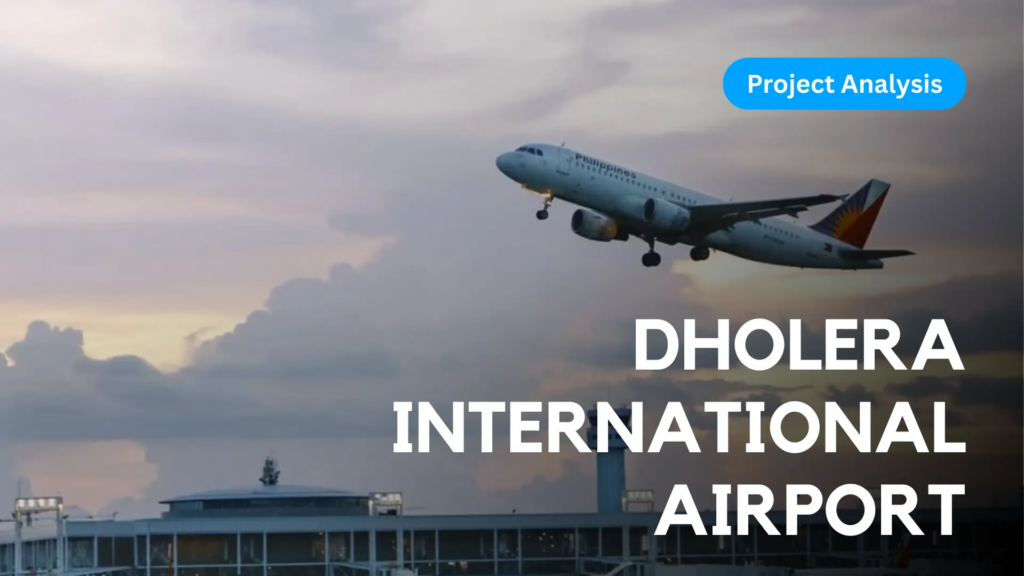
Rail connectivity remains the weakest link today: Dholera currently has no operational railway station of its own. A dedicated Bhavnagar–Dholera rail corridor (~65 km) has government approval and is in the survey/feasibility stage, and the Ahmedabad–Dholera semi-high-speed rail is Cabinet-approved but not yet under construction — for now, road via the expressway is the only fast connection.
Understanding the Dholera Master Plan
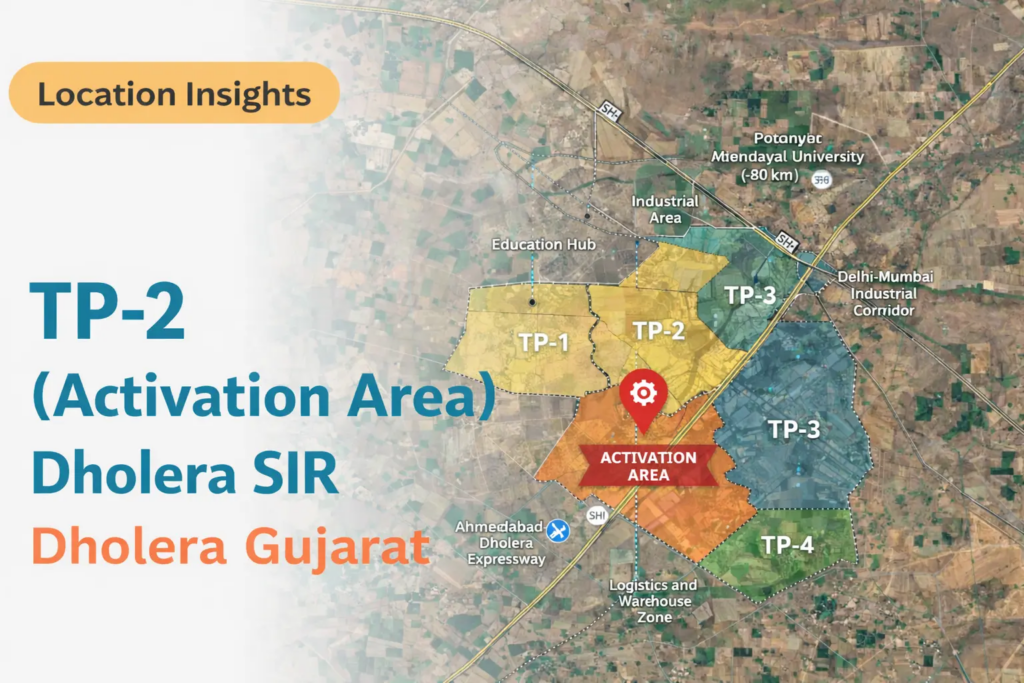
Dholera SIR’s developable land is divided into six Town Planning (TP) Schemes, all six of which have sanctioned draft plans. Development is being rolled out in phases rather than all at once:
| TP Scheme | Sub-Schemes | Phase | Status (2026) |
|---|---|---|---|
| TP1 | 1A1–1A5, 1B | Phase 1 | Activation Area — trunk infrastructure largely complete |
| TP2 | 2A, 2B1–2B6 | Phase 1 | Activation Area — most active development zone |
| TP3–TP6 | Not yet sub-divided in detail | Phase 2 & 3 | Draft-sanctioned only; infrastructure not yet built |
Within the master plan, land is earmarked for specific uses: residential neighbourhoods, a city centre and commercial core, a Knowledge & IT zone, industrial zones (including defence, aviation, electronics, pharma, and general manufacturing), a High Access Corridor along the main arterial roads, solar and renewable energy zones, green belts, and logistics zones. A plot’s location relative to these use-zones — not just its distance from the expressway — materially affects both its legal buildability and its long-term value.
These Town Planning schemes are what most people actually mean when they search for the “Dholera plot scheme” — the government’s official land-use and layout plan for each zone, not a marketing package sold by an individual developer. Any specific “scheme” name attached to a project should be checked against which TP scheme and sub-scheme it genuinely falls within, using the table above, rather than taken at face value from a brochure.
Where to Invest — TP1 vs. TP2 vs. Outside the SIR
| Factor | TP1 (Activation Area) | TP2 (Activation Area) | Outside Notified SIR Boundary |
|---|---|---|---|
| Zoning | Predominantly residential and public amenities | Commercial, High Access Corridor, high-density residential | Unregulated — agricultural unless independently converted |
| Infrastructure status | Roads, water, drainage largely complete | Trunk infrastructure complete, arterial road frontage | Not covered by DSIRDA infrastructure plans |
| Permitted FSI | Approx. 1.5–2.5 | Up to 4.0–5.0 on 70m-plus arterial-facing plots | Not applicable / governed by regular Gujarat land-use rules |
| Typical price band (2026) | ₹8,000–₹12,000 per sq. yd | ₹11,000–₹15,000+ per sq. yd (higher on arterial frontage) | Highly variable; often marketed cheaper, correspondingly higher risk |
| Best suited for | Buyers wanting to build within 1–3 years | Mid-term holders (3–5 years) targeting commercial/high-density resale | Generally not recommended without independent legal verification |
| Legal buildability today | Yes, for clear-title RERA-registered plots | Yes, for clear-title RERA-registered plots | Only if independently NA-converted and outside SIR restrictions |
The practical takeaway: plots inside the officially notified SIR boundary, within a sanctioned TP scheme, and inside the Activation Area (TP1/TP2) carry materially less regulatory risk than plots marketed as “near Dholera” or “Dholera outskirts.” A large share of the confusion — and a large share of the fraud — in this market comes from land outside the notified boundary being sold with Dholera branding.
Infrastructure Status — What’s Actually Built vs. Still Planned
| Infrastructure | Status (2026) |
|---|---|
| Ahmedabad–Dholera Expressway (109 km) | Operational — inaugurated March 2026 |
| Dholera International Airport | Runway complete, trial landing conducted; developer/government sources target full Phase 1 passenger operations by end of 2026 — treat as a target, not a confirmed date |
| 765 kV Power Substation | Commissioned |
| Narmada Pipeline Water Supply | Commissioned for the Activation Area |
| Semi-High-Speed Rail (Ahmedabad–Dholera) | Cabinet-approved May 2026; construction not yet started |
| Elevated Metro Corridor (108 km) | Planned; not yet under construction |
| Tata Electronics–PSMC Semiconductor Fab | Under construction since March 2024; targeted completion 2028 |
| SEZ Notification (Semiconductor zone) | Notified April 2026 (66.166 hectares) |
| Schools (Activation Area) | Planned, targeted academic operations 2027–28 |
| Multi-specialty Hospital (Phase 1, 100 beds) | Under development, targeted for 2026 |
| TP1/TP2 trunk roads, drainage, utilities | Government-linked sources (DICDL reporting) cite over 95% complete in the Activation Area — an official figure worth re-confirming against DICDL’s own published status before relying on it |
| TP3–TP6 infrastructure | Not started; schemes are draft-sanctioned only |
The pattern is consistent: hard infrastructure (roads, power, water, the expressway) is genuinely ahead of schedule and largely delivered. Social infrastructure (schools, hospitals, a functioning residential population) is still 2–3 years out even in the best-developed pockets, and mass-transit (rail, metro) is years away from breaking ground. An investor buying today is buying into infrastructure momentum, not a livable, populated city.
The Semiconductor Catalyst
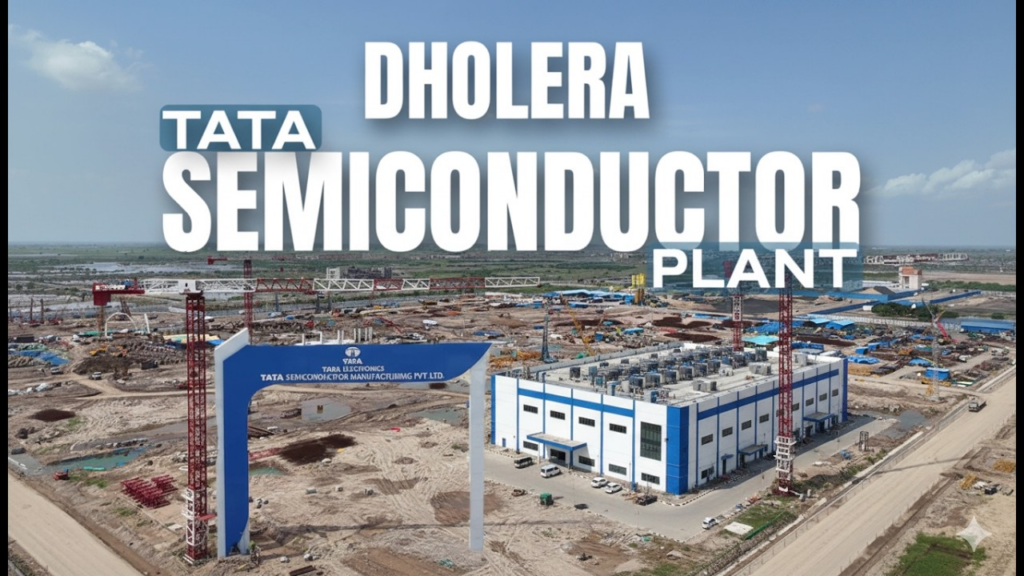
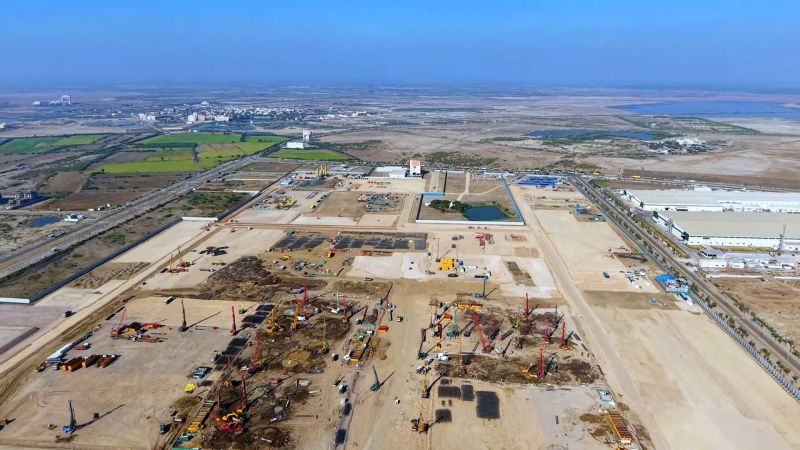
The single biggest reason Dholera’s investment narrative has shifted from speculative to substantive is the Tata Electronics–PSMC semiconductor fab — a ₹91,000 crore investment expected to produce 50,000 wafers per month and create over 20,000 direct skilled jobs. Industrial employment of this kind typically generates a multiplier of 3–5 indirect jobs in retail, services, logistics, and housing support, which — if it materialises as projected — could bring 60,000–100,000 new residents to the region over five to seven years. This is the real demand driver behind Dholera’s residential plot pricing, distinct from the speculative land-banking that characterised the region’s early years. It is also a single point of dependency: if the fab’s 2028 completion timeline slips meaningfully, the residential demand thesis slips with it.
Dholera Plot Price — Smart City Plot Price & Market Rates (2026)
The bands below are aggregated from multiple Dholera-focused property portals and broker listings, not a single audited source — treat them as an indicative range to sanity-check a quote against, and always ask any seller for their specific project’s RERA-filed price list rather than relying on this table alone.
| Plot Type / Zone | Indicative Price Range (2026) |
|---|---|
| Residential plots, general | ₹7,500 – ₹15,000 per sq. yd |
| Residential plots, premium arterial-facing (TP2) | ₹15,000 – ₹22,000 per sq. yd |
| Commercial plots | ₹12,000 – ₹20,000 per sq. yd |
| Industrial plots (Activation Area) | ₹5,000 – ₹10,000 per sq. yd |
Dholera smart city plots have followed a consistent upward trajectory: prices are widely reported to have moved from roughly ₹2,500 per sq. yard in 2015 to the current ₹10,500–₹22,000 band — directionally consistent with the region’s infrastructure progress, though not independently audited. Multiple market sources cite 25–30% average annual appreciation over the past three years specifically, coinciding with the expressway and semiconductor announcements. Two things to weigh against that headline number: first, it is a paper valuation until there is an active, liquid resale market to test it against; second, rates vary enormously by whether a specific plot sits inside the notified SIR boundary and a sanctioned TP scheme, or is merely marketed as being “in Dholera.”
What the Price Should Include, and What It Won’t
- Included in most quoted base rates: the land cost itself, and typically the developer’s basic layout/development charges where applicable.
- Not included — verify separately for every listing: stamp duty and registration (Gujarat: approximately 4.9% stamp duty + 40% surcharge on the stamp duty, making it effectively around 6%, plus a further 1% registration charge; women buyers get a 1% stamp duty concession), NA (Non-Agricultural) conversion premium if not already converted (reduced from 30% to 10% of jantri value as of November 2024), any PLC (plot location charges) for corner/road-facing plots, society/association formation charges, and legal/documentation fees.
Dholera Plot Booking Process — What Actually Happens When You Book
Understanding the booking process protects you as much as any document checklist does. A typical Dholera smart city plot booking follows this sequence, though specifics vary by developer:
- Token/booking amount — usually a small percentage (commonly 5–10% of the plot value) reserves a specific plot and unit number. Get a signed receipt referencing the exact survey number and TP scheme, not just the project name.
- Agreement to Sell — signed once the booking is confirmed, laying out the full payment schedule, plot dimensions, and TP scheme reference. This is a promise of a future sale, not a transfer of title.
- Balance payment per the agreed schedule — construction-linked or time-linked, as negotiated; confirm in writing whether payments are going into a RERA escrow account.
- Registered Sale Deed — executed once the full consideration is paid, at the Sub-Registrar’s office, with stamp duty and registration charges paid at that point. This is the step that actually transfers legal title, not the booking.
- Possession handover — should coincide with, or follow shortly after, registration. If a developer offers “possession” before registration, treat that as informal and legally unprotected.
The single most common way a Dholera plot booking goes wrong is skipping straight from the token payment to construction promises without ever confirming the underlying TP scheme, NA conversion, and RERA registration in between. Booking speed should never substitute for the verification steps covered in this guide.
Legal & Regulatory Checklist Before Buying Any Dholera Plot
This is the section that matters more than any brochure. Verify every item independently — never take a broker’s word for any of it.
- Is the plot inside the officially notified Dholera SIR boundary? Confirm directly with DICDL/DSIRDA at dicdl.gujarat.gov.in — not with the seller’s map.
- Which Town Planning scheme and sub-scheme does it fall under? Cross-check the TP number against the government’s finalised TP scheme maps at dholera.gujarat.gov.in.
- Is the underlying land NA (Non-Agricultural) converted, and can you see the NA order? Agricultural land cannot legally be developed or registered as a residential plot without this. A large share of Dholera-area fraud involves land sold as “residential plots” while still legally classified as agricultural.
- Is the specific project RERA-registered? Search the project name, developer, and RERA number directly on gujrera.gujarat.gov.in. Dholera as a region is not itself a single RERA project — every individual developer scheme needs its own registration. If a broker cannot produce a verifiable RERA number, treat that as disqualifying.
- Does the title chain match the seller? Obtain and independently verify the 7/12 extract (or Gujarat’s equivalent revenue record), and confirm there is no encumbrance, litigation, or multiple-sale history on the parcel.
- Is there an NOC from DSIRDA or the relevant authority confirming the plot is within an approved zone with no objection to sale?
- Are you signing a Sale Agreement or a registered Sale Deed? An agreement to sell is a promise of a future transaction and does not itself transfer ownership; only a registered sale deed, with stamp duty and registration charges paid at the Sub-Registrar’s office, legally transfers title and possession.
- Does the physical location match the marketed location? Fraud cases in this market have specifically involved “flipped” or mismatched land parcel mapping — the plot shown on a map is not always the plot in the registered documents. Insist on a physical site visit with the survey number pointed out on the ground, not just on a brochure map.
- Who holds the escrow, if any, and what percentage of funds is protected? Under RERA, developers must deposit 70% of project collections in a dedicated escrow account for construction costs — verify this applies and is being followed for the specific project.
- What is the realistic timeline to a legally buildable, possession-ready plot — as distinct from a plot that is merely “sold” on paper?
Separately, note the well-documented context: a Gujarat High Court inquiry found evidence of a “concerted fraud” in land acquisition compensation tied to the Ahmedabad–Dholera Expressway itself — a reminder that even government-linked land dealings in this specific region have had integrity issues, and private resale land deserves at least as much scrutiny.
Dholera Smart City Investment — ROI & Realistic Horizon
Dholera was notified in 2011. Fifteen years later, the region is only now entering the phase where hard infrastructure is visibly complete and an anchor industrial tenant is under construction. That timeline matters more than any appreciation percentage: greenfield Special Investment Regions of this scale typically take 15–20 years to reach full maturity, and Dholera is roughly at its infrastructure inflection point, not its population-and-liquidity inflection point.
For comparison, GIFT City — Gujarat’s other flagship greenfield project, launched around the same period — is materially further along, with financial institutions and businesses already operating inside it, while Dholera is still pre-population. That is not a reason to avoid Dholera; it is a reason to size expectations correctly: this is a long-hold, infrastructure-led bet, not a short-term flip. Multiple market sources cite a realistic holding period of 3–7 years to capture meaningful appreciation, with the most credible institutional narratives pointing to a 5–10-year horizon for the full “3x–5x” scenarios often quoted in marketing material.
Resale liquidity today is limited — there are comparatively few genuine secondary-market transactions, and selling a Dholera plot currently takes materially longer than buying one. Liquidity is expected to improve as population and construction activity increase, but an investor should not plan around being able to exit quickly.
Answering Investor Objections — Small, Medium, and Large
If You’re a First-Time or Small-Ticket Investor (₹5–25 lakh range)
- “Is my money safe with such a small investment?” Your risk is not about ticket size — it is about whether the specific plot is RERA-registered, NA-converted, and inside the notified SIR/TP boundary. A ₹5 lakh investment in a verified plot is safer than a ₹50 lakh investment in an unverified one.
- “What if the developer disappears or the project stalls?” For RERA-registered projects, 70% of collected funds must sit in an escrow account earmarked for construction — check this is actually happening for your specific project, not assumed.
- “I can’t visit Dholera often — how do I know the plot is real?” Insist on a video-recorded site visit by an independent surveyor (not the seller’s staff) that shows the survey number marker physically on the ground, matched against the government TP map. Do this before, not after, paying any token amount.
- “Can I pay in instalments?” Many developers offer instalment or construction-linked-style payment plans for plots; ask for this in writing as part of the registered agreement, with penalty clauses for delay defined on both sides — not just the buyer’s side.
- “What if I’m pressured to decide fast because ‘prices are rising daily’?” Urgency is one of the most common tactics tied to fraudulent listings specifically in this market. A legitimate, RERA-registered, DSIRDA-verifiable plot will still be verifiable next week.
- “Is this actually cheaper than buying in Ahmedabad itself?” Yes, on a per-sq.-yard basis Dholera plots are currently a fraction of Ahmedabad city rates — but that also reflects the absence of a livable population, schools, hospitals, and daily infrastructure today, which Ahmedabad already has.
If You’re a Mid-Sized Investor (₹25 lakh – ₹2 crore range)
- “Should I buy in TP1 or TP2?” TP1 suits a shorter build-ready horizon and residential end-use; TP2’s commercial/high-density zoning and arterial frontage suit a 3–5-year hold aimed at commercial or high-FSI resale. Neither is automatically “better” — match it to your horizon and use case.
- “How does this compare to investing in an established Tier-1 or Tier-2 city instead?” Established cities offer lower but more certain and more liquid returns; Dholera offers a higher potential return with materially higher execution and liquidity risk tied to infrastructure delivery timelines actually being met.
- “What’s my realistic exit path if I need liquidity in 3 years?” Be honest with yourself here: the secondary market is thin today. Plan for a 5–7-year hold as the base case, not the optimistic case.
- “What are the full transaction costs I should model, not just the headline plot price?” Stamp duty (~6% effective in Gujarat), registration (1%), NA conversion premium if applicable (10% of jantri value post-November 2024), PLC for preferred-facing plots, and legal fees — model all of these into your break-even, not just the per-sq.-yard rate.
- “Are NRIs and PIOs eligible to buy here?” Yes for residential or commercial plots — no RBI approval is required, and there’s no cap on the number of properties. The restriction is specifically on agricultural land; an NRI must confirm the plot has already received NA conversion before purchase, since buying agricultural land directly violates FEMA and carries penalties of up to three times the transaction value.
- “Should I buy directly from a developer or through a broker/channel partner?” Cross-verify whatever a channel partner quotes against the developer’s own RERA filing and official price list — discrepancies between broker pricing and RERA-filed pricing are a documented pattern in this market.
If You’re a Large or Institutional Investor (₹2 crore+, bulk acquisition)
- “Can I acquire land at scale, and does that come with policy incentives?” Dholera’s Special Investment Region status carries specific industrial-policy incentives for larger, sector-aligned developments — these are distinct from, and generally more favourable than, retail plot purchase terms. Engage DICDL/DSIRDA directly for bulk or institutional acquisition rather than through retail brokers.
- “Is there a REIT, AIF, or other pooled vehicle to gain exposure without direct land management?” As of 2026, Dholera does not have a mature, listed REIT specific to its residential plot inventory; institutional exposure here is still primarily direct land acquisition or JV-based development, which carries materially different governance and diligence requirements than a listed instrument.
- “What is the political and policy continuity risk across election and administration cycles?” Dholera has had consistent state and central government backing across multiple election cycles since 2011 as part of the DMIC programme, which is a genuine positive signal — but 15 years of continuous but slow-moving execution is also itself a data point on how long large decisions here take to convert into delivered infrastructure.
- “What’s the real exit liquidity for a large land parcel, as opposed to a retail plot?” Materially harder than retail resale — large-parcel buyers should assume disposal will require either institutional/developer buyers, a joint-development structure, or holding through to the point where end-user residential/commercial demand is active on the ground, not before.
- “How exposed is the investment thesis to the semiconductor fab’s execution risk specifically?” Significantly exposed. The Tata–PSMC fab is the single largest concrete demand driver behind current pricing; large investors should track its construction milestones (targeted completion 2028) as a leading indicator, not just infrastructure-completion percentages.
Risk Assessment — Genuine Positives
- Hard infrastructure (the Ahmedabad–Dholera Expressway, power substation, Narmada water pipeline) is now operational, not merely announced — a rare state for a project at this stage.
- A ₹91,000 crore anchor industrial investment (Tata Electronics–PSMC semiconductor fab) is under active construction, providing a concrete, trackable demand driver rather than speculative narrative alone.
- Central government backing (semi-high-speed rail Cabinet approval, SEZ notification) has continued through 2026, indicating sustained institutional commitment.
- All six Town Planning schemes have sanctioned draft plans, and TP1/TP2 (Phase 1, the Activation Area) report over 95% infrastructure readiness — meaning some plots here are legally and practically buildable today.
- Documented price appreciation (roughly ₹2,500 to ₹10,500–₹22,000 per sq. yard between 2015 and 2025) reflects real, sustained investor and institutional interest rather than a single speculative spike.
- Gujarat’s state government has a credible track record of delivering comparable greenfield infrastructure (GIFT City, Sanand, Mundra), lending more institutional credibility than most similarly announced projects elsewhere in India.
Risk Assessment — Limitations
- Regulatory risk is the single largest issue in this market: a substantial share of “Dholera plots” marketed online are not inside the notified SIR boundary, are not NA-converted, or are not RERA-registered — verify every one of these three facts independently for any specific listing, every time.
- Land fraud is a documented, named pattern in this specific region — including a Gujarat High Court finding of “concerted fraud” tied to expressway land acquisition compensation, and repeated reporting on fake plot sales using mismatched or “flipped” parcel mapping.
- Pricing risk: quoted per-sq.-yard rates vary widely by source and often are not reconciled against the developer’s official RERA-filed price list — always cross-check broker quotes against the primary filing.
- Long gestation period: Dholera was notified in 2011; full regional maturity is realistically a 15–20-year horizon, and the region is still pre-population even in its most-developed Activation Area pockets.
- Liquidity/exit risk: the secondary resale market remains thin; selling is materially harder than buying today, and investors should plan for multi-year holds rather than short-term flips.
- Social infrastructure lag: schools are not targeted to be operational until the 2027–28 academic year, and the first-phase hospital (100 beds) is still under development — meaning no genuine residential livability exists in the region yet.
- Single-point industrial dependency: current residential demand pricing leans heavily on the Tata–PSMC semiconductor fab’s 2028 completion; a meaningful delay there would directly affect the demand thesis underpinning current valuations.
- Mass-transit timeline risk: the semi-high-speed rail is only Cabinet-approved (not under construction), and the metro corridor remains in the planning stage — connectivity beyond the expressway is still years away.
Hidden Information Between the Lines
The most important thing marketing material rarely states plainly is that “Dholera” as a brand and “Dholera SIR” as a legally notified boundary are not the same thing. Land parcels well outside the official Special Investment Region are routinely marketed with “Dholera” in the name, at attractively low prices, specifically because buyers assume proximity to headline news (the expressway, the airport, the semiconductor fab) automatically confers the same regulatory protections and appreciation trajectory as land actually inside the notified TP schemes. It does not.
A second, related point: NA conversion status and RERA registration are two separate approvals, and a plot can have neither, one, or both. A plot can be legitimately located inside the SIR boundary and still be sold before NA conversion is complete, or before the specific developer scheme has secured its own RERA number — both facts a buyer would only catch by checking primary sources directly rather than trusting a brochure that says “SIR-approved” or “government-backed” without specifying which approval that phrase actually refers to.
Third, the frequently quoted “3x–5x return” framing conflates paper appreciation on unsold developer inventory with realised, liquid returns on an actual resale transaction. Given the thin secondary market documented above, an investor should treat quoted appreciation percentages as directional evidence of demand, not as a guaranteed realisable return absent an actual buyer willing to transact at that price today.
Fourth, the 15-year gap between Dholera’s 2011 notification and its current infrastructure-delivery stage is itself informative: this is not evidence the project has failed — measurable, physical infrastructure is now visibly complete — but it is a caution against assuming the next phase (population, social infrastructure, mass transit, resale liquidity) will move faster than the first phase did.
Questions to Put in Writing Before You Buy Any Dholera Plot
- Can you show me the plot’s exact survey number, TP scheme, and sub-scheme, and can I independently verify this against the DSIRDA/government TP map?
- Is this plot within the officially notified Dholera SIR boundary — can you point me to where I can confirm this directly with DSIRDA?
- Has this land received NA (Non-Agricultural) conversion, and can I see the NA order directly, not a summary of it?
- What is this specific project’s RERA registration number, and can I verify it myself on gujrera.gujarat.gov.in before paying anything?
- Will I be signing a registered Sale Deed, or only an Agreement to Sell — and when exactly does legal title and possession transfer?
- Who is the legal seller of record, and does the name on the title documents match the name of the person/entity I am paying?
- What percentage of my payment goes into an escrow account, and can I see evidence this account exists and is being used per RERA rules?
- What are all-in costs beyond the quoted per-sq.-yard rate — stamp duty, registration, NA premium if applicable, PLC, and any society/association charges?
- Can I conduct an independent, third-party site visit with a surveyor who is not affiliated with your firm?
- What is your firm’s own track record — how many plots have you sold in Dholera specifically, and can you provide references I can independently contact?
- What is my realistic exit path if I need to sell within 3 years, and can you connect me to any actual secondary-market transaction data, not projected appreciation?
Who Should Consider Residential Plots in Dholera
- Long-horizon investors comfortable with a 5–10-year hold who are investing surplus capital, not funds needed for near-term liquidity.
- Buyers specifically targeting eventual end-use (retirement home, second home, or relocation tied to the semiconductor/industrial job market) rather than a short-term flip.
- Investors who are willing and able to do independent legal diligence — or pay for it — on every specific plot, rather than relying on broker assurances.
- Those already diversified across more liquid, established real estate and looking to add Dholera SIR property as a small, higher-risk, higher-potential-return allocation.
- NRIs seeking residential (not agricultural) land exposure in India, who understand and will independently verify NA-conversion status before purchase.
Who Should Not Consider Residential Plots in Dholera
- Anyone needing the ability to exit within 1–2 years — the resale market is currently too thin to guarantee this.
- Buyers relying on a home loan for a plot in a zone without confirmed NA conversion and RERA registration — most lenders will not finance land without both, and the ones that do carry higher risk themselves.
- First-time buyers unwilling or unable to independently verify RERA status, NA conversion, and TP-scheme boundaries before paying — verbal assurances from a broker are not a substitute for this.
- Investors seeking rental income in the near term — there is no meaningful resident population yet to generate rental demand.
- Anyone being pressured into a fast decision on urgency (“prices rising daily,” “only 2 plots left”) — this specific pattern is directly associated with documented fraud in this market.
Dholera Residential Plot Projects on Unreal Investors
If you’re specifically looking at Dholera plots for sale in Gujarat, the RERA-registered projects below — all inside the notified Dholera SIR boundary — are a starting point. Run every one of them through the verification checklist above before booking a plot.
| Project Name | Location |
| GAP Aakar | Dholera Special Investment Region (Activation Area, Gujarat) |
| Satyaja Bliss Grandeur | Dholera (Dholera SIR, Ahmedabad) |
| Greenera Prime | Kadipur, Dholera |
| Cube Nest 63 | Dholera, Ahmedabad, Gujarat |
| Palm Greens Platinum | P-2 Activation Area of Dholera Special Investment Region (Dholera SIR) |
| Greentech Residency, Dholera | Fedra–Pipli State Highway, Near Dholera International Airport Road, Hebatpur, Dholera SIR, Gujarat |
| Lakeside Residency | Pipli, Dhandhukha, Dholera, Gujarat |
| Avirahi Smart City Dholera | Dholera Smart City (SIR), Gujarat, India |
| Expressway City Township | Dholera SIR, Gujarat (near Anandpur village) |
| Palm Villas | TP-2 (Activation Area), Dholera Smart City, Gujarat |
| Dholera Forest Estate | Dholera Smart City (SIR), Gujarat |
| Fidato Luxuria | Dholera SIR |
| Greenfield City | Dholera Smart City (near Dholera SIR development area) |
| Orchid Township in Dholera | Gamph Village, Dholera Taluka, Ahmedabad District, Gujarat |
| WestWyn County | Fedra–Pipli Highway, Dholera Smart City |
| Dholera International Airport City Township | Near Navagam Village, Dholera Taluka, Gujarat |
| Elegance Township (Elegance 1 & Elegance 2) | Dholera Smart City, Gujarat |
| ALFA City Township | Dholera–Bhavnagar Highway, Gujarat |
Honest Verdict
Dholera in 2026 is a genuinely different proposition than Dholera in 2018. The expressway is open, the airport has run trial landings, the power and water backbone for the Activation Area is commissioned, and a ₹91,000 crore semiconductor fab is physically under construction — none of that was true even three years ago, and all of it is independently verifiable rather than promotional claim. That is real progress, and it is the main reason serious institutional attention, not just retail marketing, has shifted toward the region.
The core problem is not whether Dholera will eventually work — the infrastructure trajectory suggests it plausibly will — it is that the retail land market layered on top of that infrastructure story is still thick with unverified, mismarketed, and occasionally fraudulent inventory, and the underlying region itself is still 15-plus years from the kind of population and liquidity that would make an exit easy. An investor who treats this as “buy now, flip in two years” is set up to be disappointed or worse; an investor who treats it as a long-horizon, diligence-heavy, infrastructure-led land bet — verifying TP scheme, NA conversion, and RERA status on every single plot before paying a rupee — is making a defensible, if genuinely long-dated, bet.
Buy the region’s infrastructure story if you find it credible. Do not buy any specific plot on the strength of that story alone — verify the plot on its own facts, every time. Treat Dholera land investment, and Dholera city investment more broadly, as a long-horizon regional bet you make one verified plot at a time, not a single easy decision.
Disclaimer: This analysis is based on publicly available information gathered through independent research as of July 2026. No financial advice is implied. Always consult a RERA-registered real estate agent and an independent property lawyer before making any real estate investment, and independently verify all TP scheme, NA-conversion, and RERA registration details directly with DSIRDA and GujRERA before any transaction.