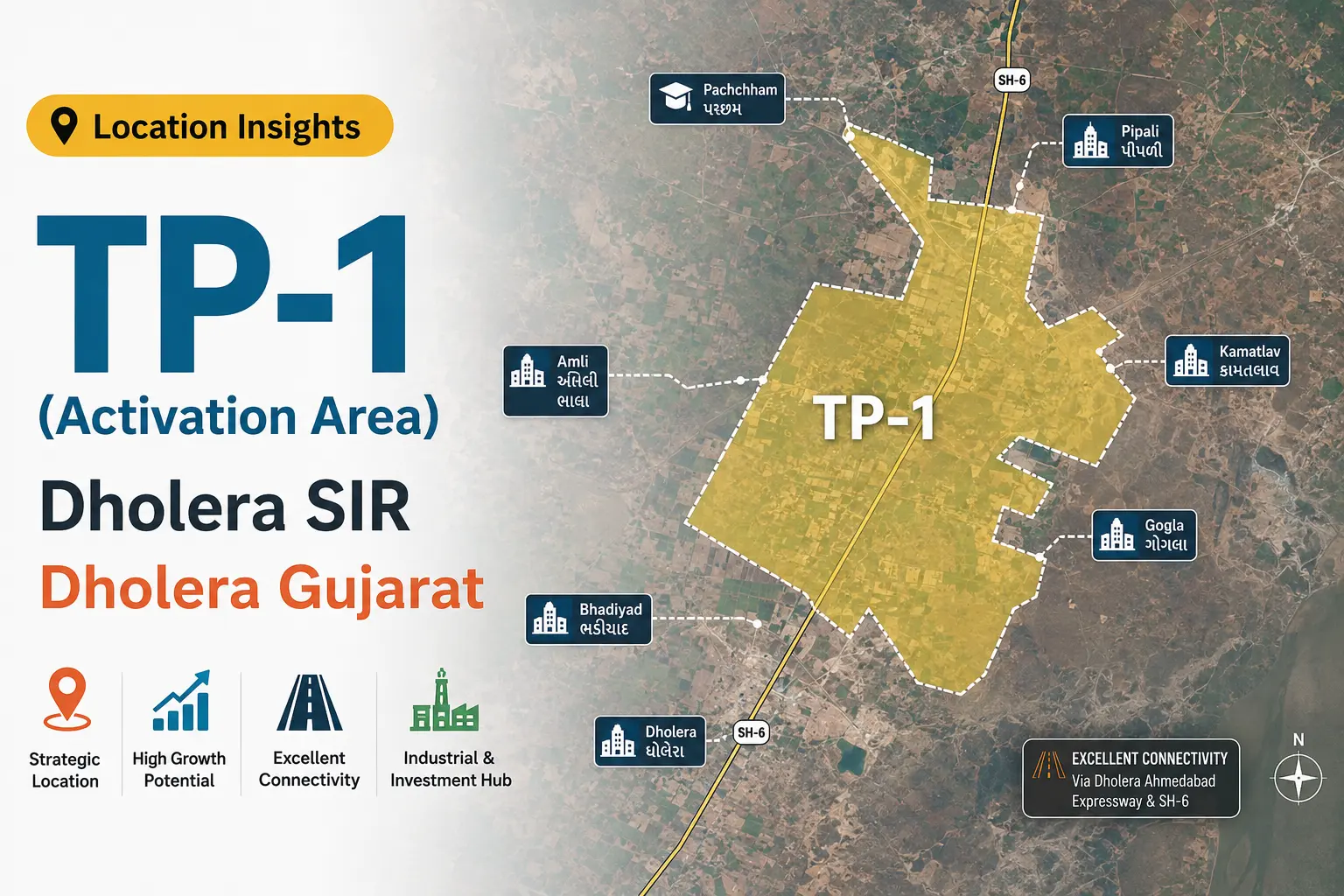
TP-1 in the Dholera Special Investment Region (SIR), Ahmedabad District, is part of the 920 sq km planned greenfield development and the first phase covering TP-1 and TP-2. Its investment relevance is primarily linked to improving regional connectivity, large industrial projects, planned civic infrastructure and the expected growth of employment around Dholera. The locality remains in a development phase, so investors need to balance long-term infrastructure potential against the current shortage of established social amenities.
Location Context
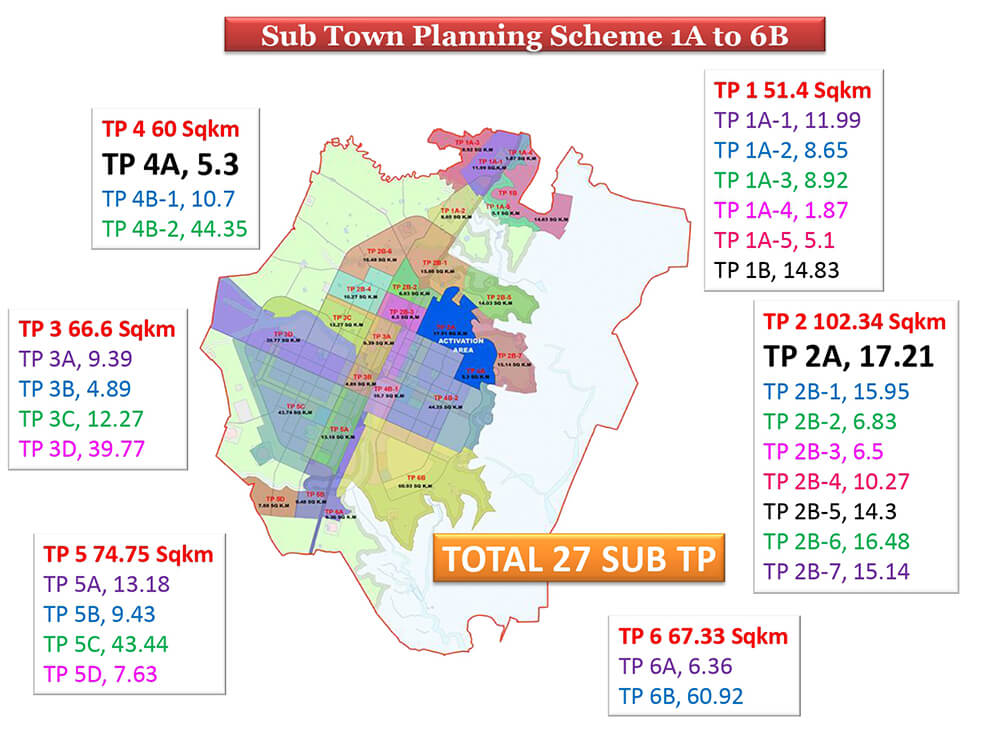
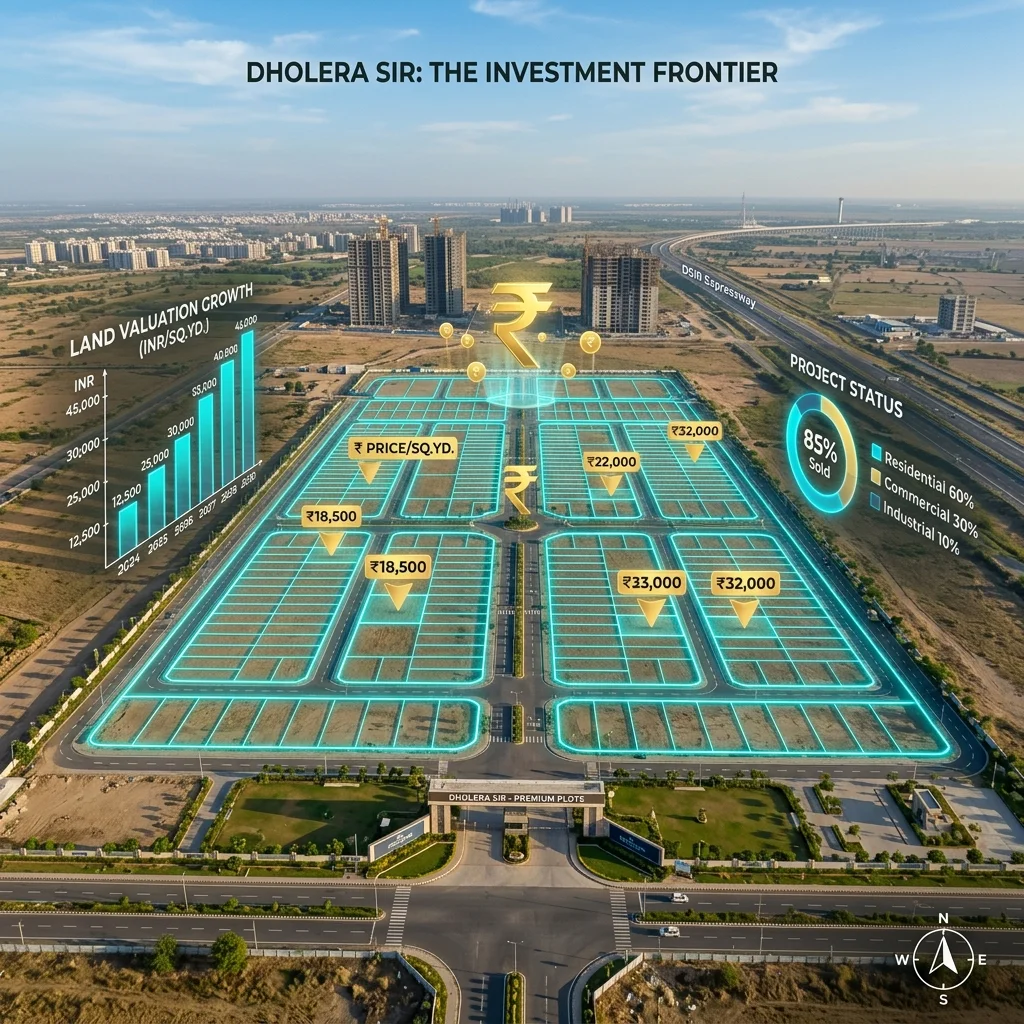
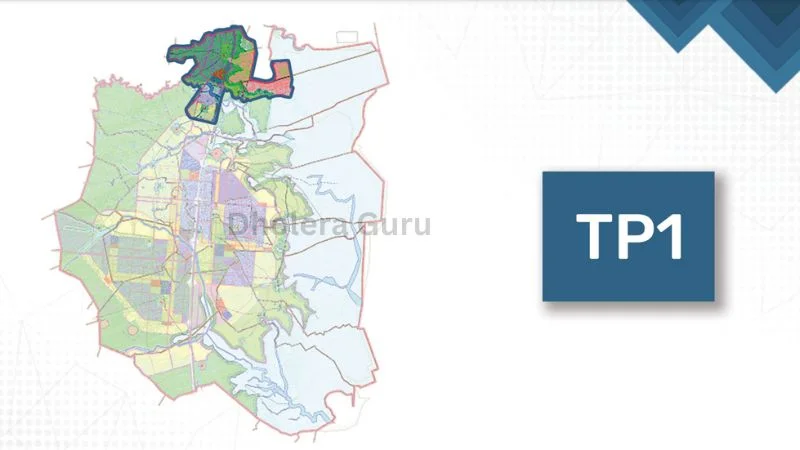
TP-1 is positioned within Phase 1 of Dholera SIR and is adjacent to the Dholera Activation Area, which is planned as a major urban and commercial node. Nearby villages include Juna to the north and Khadipur to the east.
- The larger Dholera SIR spans approximately 920 sq km, while the first development phase covers TP-1 and TP-2 across about 153 sq km.
- The Activation Area is important for TP-1 because several planned residential, commercial, healthcare and hospitality facilities are concentrated there.
- The locality is transitioning from largely open land toward an integrated industrial and urban environment.
- For investors, this means the investment case is driven more by future infrastructure and economic activity than by an already mature residential ecosystem.
Connectivity & Transport
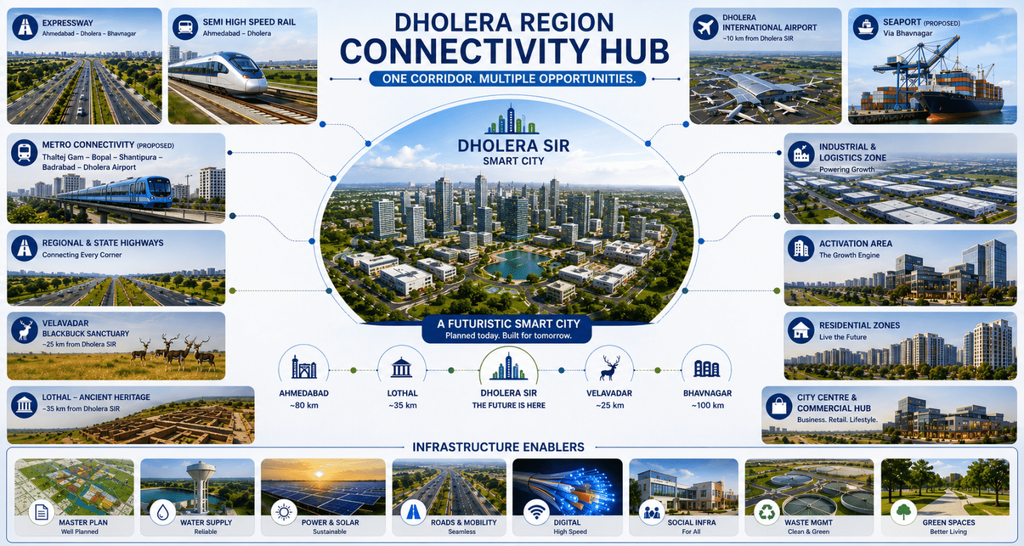
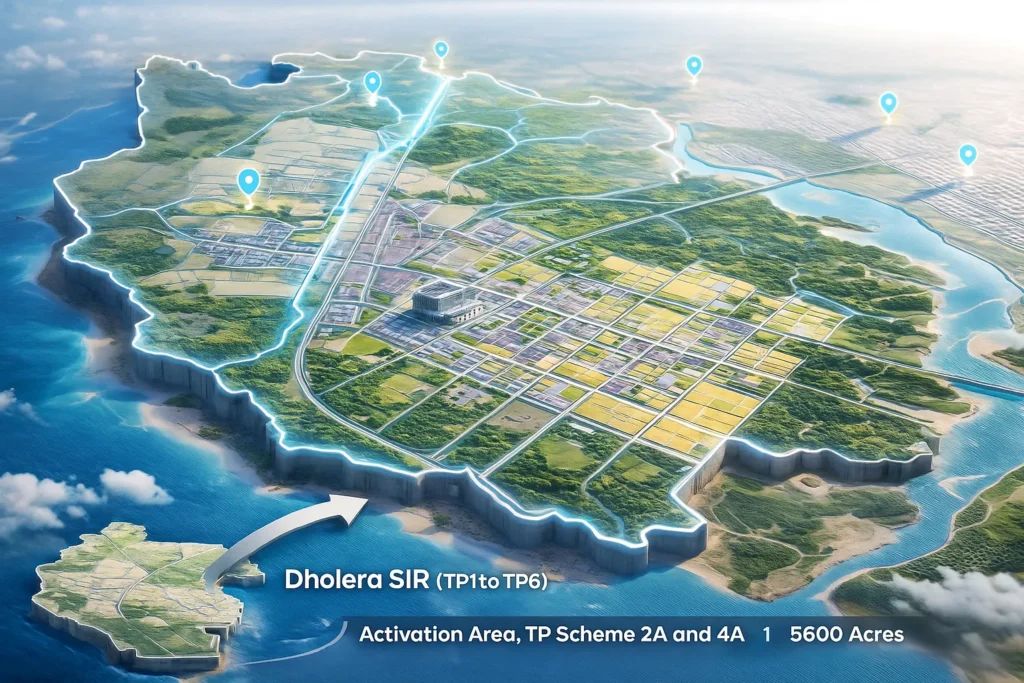
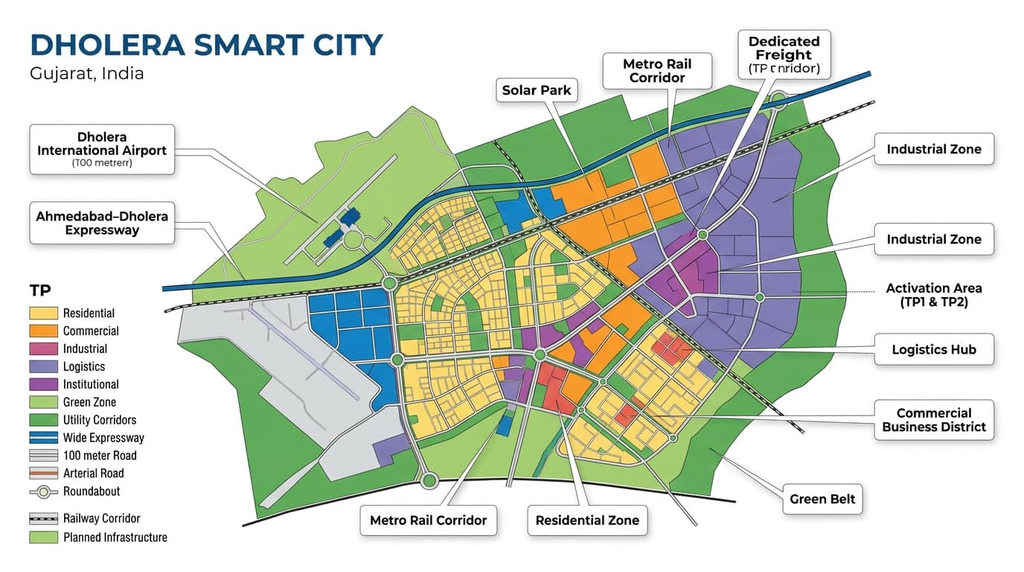
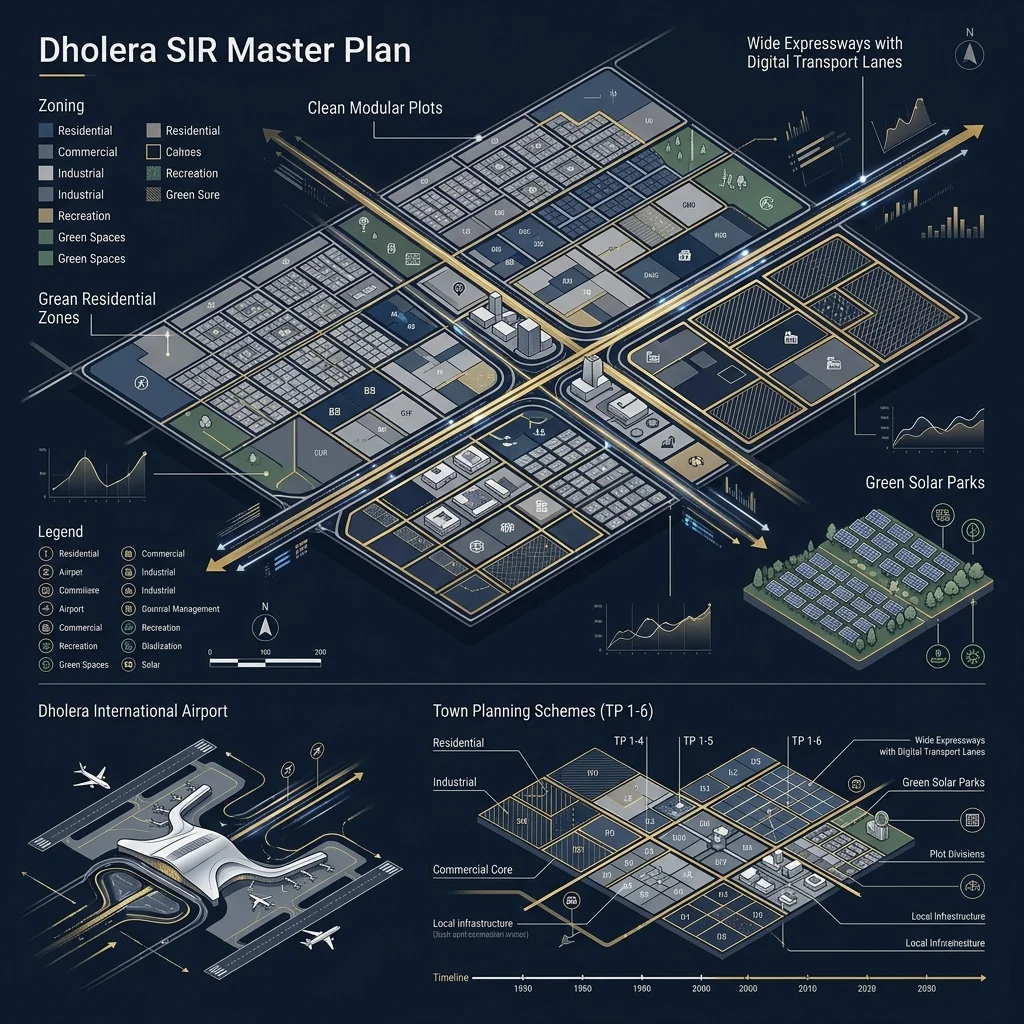
Connectivity is one of TP-1’s strongest investment drivers. The Ahmedabad-Dholera Expressway has significantly improved road access, while airport and rail projects are expected to add further regional connectivity.
- The Dholera International Airport is approximately 3 km away and is under construction, with the research indicating around 80% completion and operations targeted for 2026.
- The Ahmedabad-Dholera Expressway is less than 1 km away. The 109 km access-controlled route connects Sarkhej with Adhelai through Dholera and was inaugurated in March 2026.
- The expressway reduces Ahmedabad-Dholera travel to approximately 45 minutes, improving accessibility for workers, businesses and residents.
- A 134 km double-track Sarkhej-Dholera semi-high-speed rail corridor was approved in May 2026, with completion targeted for 2030-31.
- Ahmedabad Metro Phase III has also received approval for a 60 km network with 41 stations, providing a longer-term framework for improved regional connectivity.
The limitation is timing: airport, rail and metro benefits depend on completion and operationalisation. Until then, road connectivity remains the primary practical advantage.
Educational Institutions
Education infrastructure is currently developing rather than mature.
- An integrated Nursery-XII school approximately 2 km away is being developed as the first school in Dholera SIR, with CBSE/IB positioning and targeted completion around 2027-28.
- Another Nursery-XII school is planned approximately 2.5 km away in the Activation Area, with CBSE/ICSE/IB formats being considered.
- There are no existing colleges or universities within 5 km according to the research, with higher education currently available in Ahmedabad.
The planned schools are relevant for residential demand because they can support family settlement as industrial employment increases. However, investors seeking an established education ecosystem today may find the locality less convenient than mature urban markets.
Healthcare Facilities
Healthcare availability remains a current limitation, although planned infrastructure could materially improve the situation.
- A proposed 100-bed multi-specialty hospital is approximately 1 km away in the Activation Area.
- The project is intended to provide tertiary-care services and bids have been invited for a private operator.
- At present, there is no major hospital within 5 km, leaving residents dependent on Ahmedabad for significant medical requirements.
The planned hospital should improve residential suitability once operational. Until then, healthcare access remains a factor that investors targeting immediate end-user occupancy should account for.
Commercial & Retail Zones
Commercial activity is expected to expand alongside Dholera’s industrial development.
- A 66.166-hectare semiconductor and electronics SEZ is approximately 3 km away and is dedicated to chip, electronics and IT manufacturing.
- A planned 40-acre mixed-use complex approximately 1.5 km away will include more than 1,500 residential units along with retail and commercial facilities.
- An upcoming food court approximately 1.5 km away is planned with 600 seats and around 2,981 sq m of leasable area.
- The industrial SEZ can create employment-driven demand, while the mixed-use development can improve everyday retail access.
The main limitation is that much of this commercial ecosystem is still planned or under development. Current retail depth therefore does not yet match the projected future scale.
Leisure & Public Spaces
TP-1 is being developed with planned public-realm infrastructure rather than relying on an established leisure ecosystem.
- City planning includes wide roads, landscaped boulevards and public parks.
- Landscaped areas and public spaces are planned across the Activation Area and residential zones.
- An International Tent City with approximately 50 luxury tents is planned around 2 km away for business and leisure visitors.
- There is currently no established mall or multiplex in the immediate area.
For investors, planned green spaces and hospitality infrastructure can improve the area’s liveability and visitor appeal. However, entertainment and organised leisure options remain limited during the current development stage.
Government Projects & Infrastructure
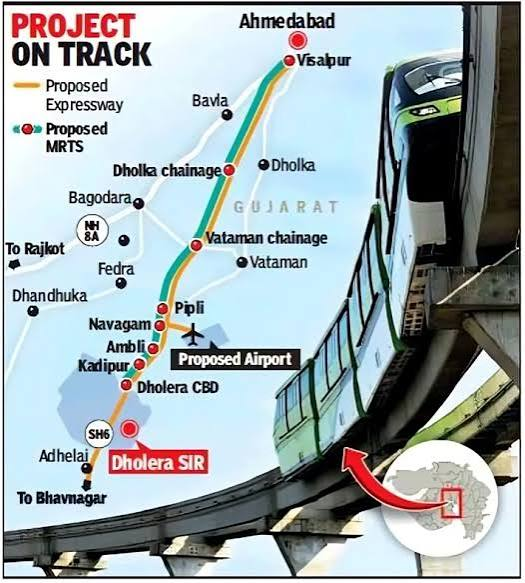
Government-backed infrastructure is central to the investment thesis for TP-1.
- The Dholera International Airport is being developed as a greenfield airport and is targeted to support domestic aviation connectivity.
- The Ahmedabad-Dholera Expressway provides the most immediate major connectivity improvement.
- The Sarkhej-Dholera rail corridor is intended to provide a faster mass-transit connection with Ahmedabad.
- Ahmedabad Metro Phase III provides a longer-term regional transit framework.
- Gujarat’s 2026 budget allocated ₹610 crore for Dholera infrastructure, including roads, airport-related works, water supply, power, sewage and ICT infrastructure.
- Gujarat’s 2026 data-centre policy positions Dholera as a major destination for data-centre investment.
The infrastructure approach reduces the risk associated with developing a greenfield urban area from scratch. The key limitation is execution risk: future investment returns remain dependent on timely completion, commissioning and utilisation of these projects.
Private Developments
Private residential development around TP-1 indicates increasing developer participation across both apartments and plotted projects.
- Seksaria Shantiban Skylar is under construction with 135 apartment units across three towers, offering 1RK, 1 and 2 BHK configurations and targeted possession around 2029.
- Gap Aakar is developing 161 one-bedroom units across approximately 1 acre, with possession targeted for 2028.
- Pegasus Earth 2 is a plotted development with 854 plots across approximately 42 hectares, with possession targeted for 2027.
- Chhabildas Dholera Marigold 548 is a ready-to-move plotted development with 57 plots.
- Greenera Prime 2 is a ready-to-move project with 29 residential plots.
- Fidato Luxuria 3 is a ready-to-move plotted development with 93 plots.
- 7 Oak Super City is an ongoing plotted development with 683 plots across approximately 30 acres.
The mix of apartments and plotted developments gives investors different exposure options. RERA registrations are available for several projects, providing a regulatory framework for those developments. Investors should still assess individual project approvals, delivery schedules, title documentation and actual infrastructure availability before committing capital.
Environmental Conditions
TP-1 is being developed with infrastructure planning intended to address utilities, drainage and green infrastructure from an early stage.
- Current green cover is modest because the surrounding landscape includes open fields.
- Tree planting is planned along roads, while landscaped boulevards and parks are part of the smart-city design.
- Artificial lakes and landscaped areas are planned to improve the urban environment.
- Water supply is designed around a piped network connected to the Gujarat water grid and Narmada canal system.
- Underground drainage is being developed alongside roads.
- Sewage treatment infrastructure is planned as part of the development framework.
The infrastructure-first approach can support long-term urban resilience and reduce dependence on retrofitted civic systems. However, the present environment is still less established and landscaped than a mature urban locality.
Economic Activity
Industrial and technology investment is the strongest structural driver behind TP-1’s long-term demand outlook.
- Tata Electronics is developing a 300 mm semiconductor fabrication facility in Dholera, with the research indicating an investment of approximately $11 billion and planned capacity of around 50,000 wafers per month.
- The facility is expected to employ thousands of workers and create demand for supporting industries.
- Tata’s semiconductor ecosystem involves collaboration with ASML and PSMC, supporting the development of advanced chip-manufacturing capabilities.
- L&T’s Vyoma project is planned as a 250 MW green hyperscale data-centre campus with an announced investment of ₹25,000 crore.
- The semiconductor and data-centre ecosystem can generate direct and indirect employment across manufacturing, technology, logistics and supporting services.
This employment base is important for residential and rental demand in TP-1. The principal limitation is that much of the economic activity is still being established, meaning the full employment and rental-demand impact will depend on project commissioning, workforce mobilisation and supporting industrial development.
Real Estate Impact Summary
TP-1’s investment profile is primarily infrastructure-led and employment-led rather than based on an already mature residential market.
- Positive: The Ahmedabad-Dholera Expressway provides a major improvement in road connectivity and is less than 1 km from TP-1.
- Positive: The proposed airport, semi-high-speed rail corridor and metro expansion can progressively strengthen regional accessibility.
- Positive: Semiconductor, electronics and data-centre investments provide a potential employment base that can support residential and rental demand.
- Positive: Planned schools, healthcare, retail, parks and hospitality facilities can gradually improve end-user liveability.
- Positive: The presence of multiple apartment and plotted developments indicates growing private-sector participation in Dholera’s residential market.
- Limitation: Current social infrastructure remains limited, particularly higher education, major healthcare, organised retail and entertainment.
- Limitation: Several major connectivity and civic projects are still under construction or planned, so their investment impact depends on execution and commissioning.
- Limitation: The present locality has a relatively modest green and urban environment compared with established cities, although landscaping and public-space development are planned.
- Investor implication: TP-1 is better suited to investors with a longer investment horizon who are comfortable with development-stage risk and whose thesis is based on infrastructure completion, industrial job creation and gradual urbanisation.